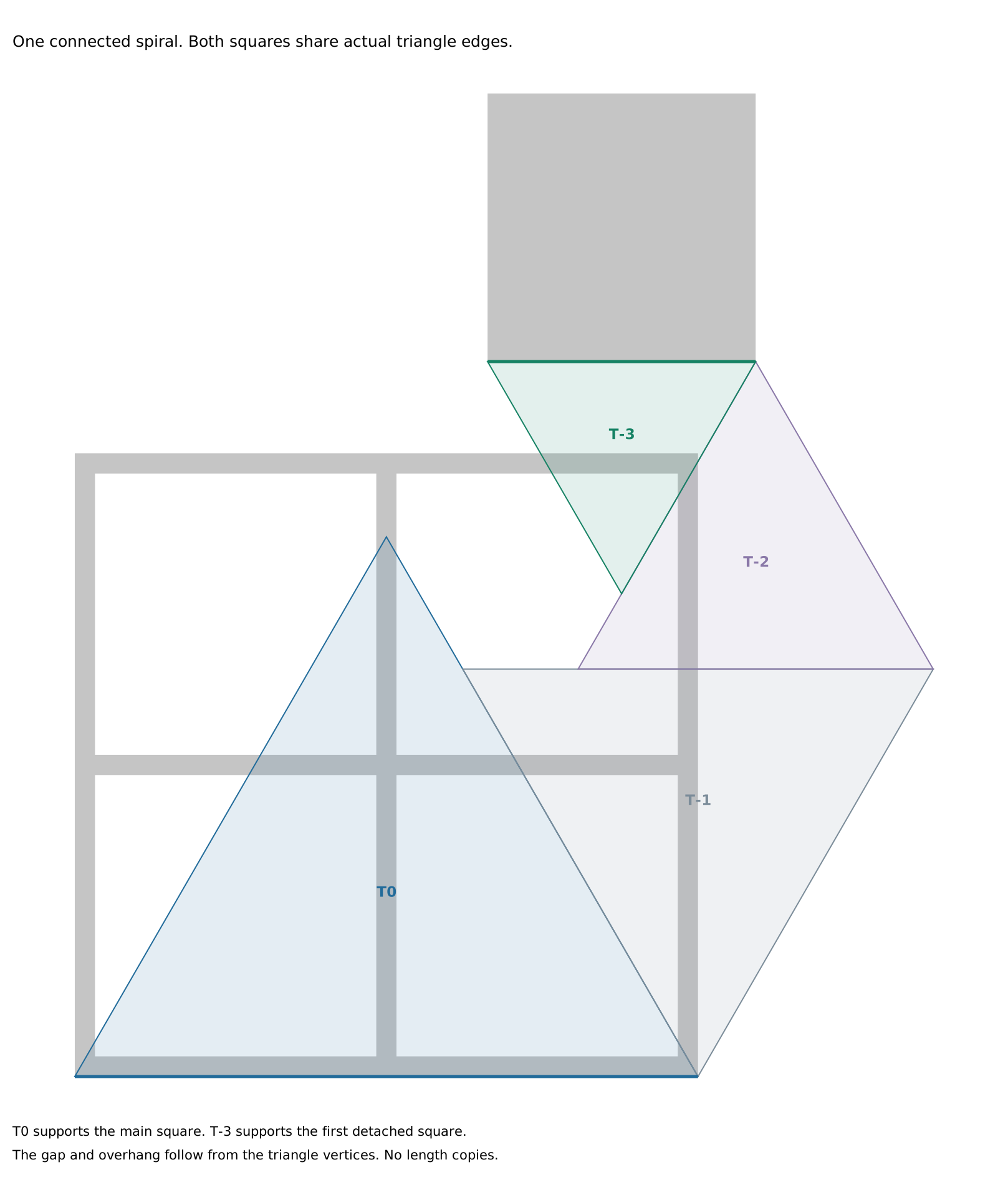
The main square uses T₀. The detached square uses T₋₃, the fourth triangle. The connected spiral continues below one screen pixel.
T₀ → T₋ₙ
PLASTIC NUMBERρ = 1.324717957…ρ³ = ρ + 1
Drag to change the construction step
D = 1000
000 / 100
T₀SpiralT₋₃Areas3DOpposite viewsFront
Compare the three face views
Front and top match. The lattice is the same from the right; the detached cube has a different horizontal offset in this construction.
FrontTopRight
Dimensions
Select a dimension to locate it. All values follow the v3 construction.
Integer Padovan sequence
The lower diagram uses integer side lengths. The main construction uses the plastic limit, with side lengths Dρⁿ. These are distinct: a finite integer ratio never equals ρ.
Pn = Pn−2 + Pn−3P₀ = P₁ = P₂ = 1
Pn / Pn−11.312500000
INTEGER SIDE LENGTHS · 60° TURNS
Geometric selection
Both squares are erected upward on horizontal edges of one connected spiral. The first two smaller square candidates intersect the main square. T₋₃ is the first whose square is fully above it. No triangle moves to a different location.
Equal-area rule
The frame and detached square have equal black area: D² − 4C² = S². Together with 2C + 3W = D, this fixes the aperture C and uniform bar width W. Equal area is a chosen design rule, not a claim about perceived weight.